Asia
Dizi
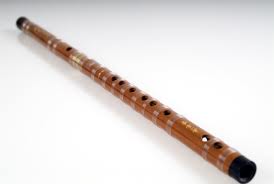
A member of the winds family. A bamboo flute popular in Chinese music, the Dizi contains a special membrane that helps produce bright tone that can be heard from far away.
Hichiriki
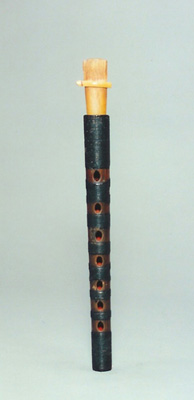
A member of the winds family. A flute from Japan, this instrument is similar in construction to the Oboe (a European instrument that contains what is known as a "double reed") although it sounds similar to the Clarinet.
Huqin
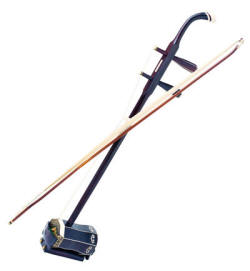
A member of the strings family. A bowed instrument that consists of two strings and three or four tuning pegs which allow the instrument to produce only three or four tones at a time.
Kokyū
A member of the strings family. Similar to the Huqin, this instrument is built with three or four strings and is played using a bow.
Koto
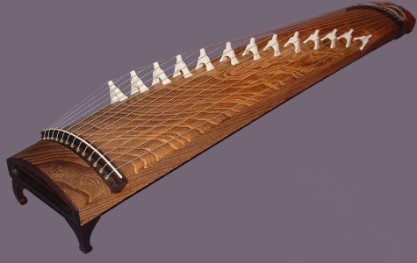
A member of the strings family. An instrument with thirteen strings and thirteen movable bridges (the device that holds the string off the base). Moving the bridge allows the musician to change the pitch of the instrument. This instrument is plucked with the fingers.
Se

A member of the strings family. Probably the precusor to the Koto, the Se has twenty-five strings and twenty-five movable bridges and a range of five octaves (the distance between a series of eight notes of progressively higher or lower pitch)
Xiao
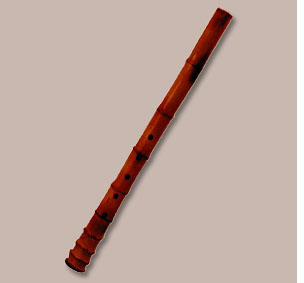
A member of the winds family. Another Chinese bamboo flute, the Xiao is played through the end unlike modern flutes which are all held horizontally.
Yangqin
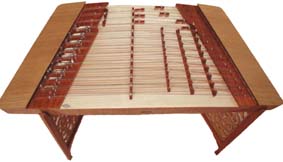
A member of the percussion family. Like a deconstructed piano, each string is set to a pitch and cannot be changed easily. Unlike the piano, the Yangqin is struck with mallets to produce a softer tone.
